
Our Products
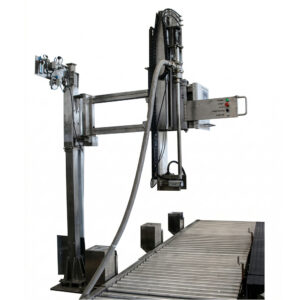
Bagging Machine
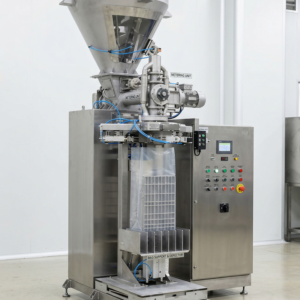
Bagging Machine
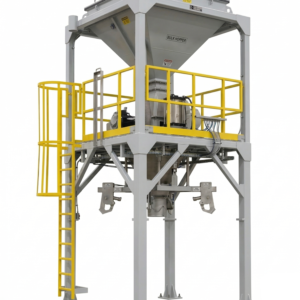
Bagging Machine
1,200 kg
Maximum fill per cycle
60/hr
Fill cycles per hour
±2% FS
Fill accuracy
3 modes
Manual / Semi-auto / Auto
IBC tanks reduce drum handling labour by 70–80% compared to 200-litre drum operations — but only if the filling station can keep up with tank throughput. The YCS300(H)-BM is designed to fill a 1,000-litre IBC in under 60 seconds, with automatic pallet positioning so a single operator can run the line without fork-lift assistance.
What Is an IBC Filling Machine?
An IBC (Intermediate Bulk Container) filling machine is a specialised liquid-weighing system designed to fill large bulk containers — typically 600 to 1,500 litres — with accurate, repeatable fill weights. Unlike drum-filling machines that handle individual 200-litre barrels, an IBC filling machine must handle the full tank weight on a pallet (often 1,200–1,500 kg gross) and fill from above or the side without requiring the operator to reposition the container.
Common IBC Sizes Supported
| IBC Type | Net Capacity | Gross Weight (filled) | Compatible |
|---|---|---|---|
| Standard 1,000L IBC | 1,000 L | ~1,200 kg (water equiv.) | ✓ |
| 600L Compact IBC | 600 L | ~750 kg | ✓ |
| 1,250L Large IBC | 1,250 L | ~1,450 kg | ✓ |
| 275-gallon IBC (US) | ~1,040 L | ~1,250 kg | ✓ |
| 330-gallon IBC (US) | ~1,250 L | ~1,450 kg | ✓ |
Fill range on this machine: 300 kg minimum — 1,200 kg maximum per fill cycle. For containers below 300 kg (standard 200-litre drums), see the YCS300(H)-BU drum filling scale.
How the YCS300(H)-BM Works
The cantilever-arm design is the key differentiator. Most fixed-frame IBC fillers require the building ceiling to be at least 4.5 m above the fill point to accommodate the full IBC height plus the filling head. The cantilever arm raises freely to any height, making it compatible with facilities as low as 3.2 m clearance.
Automatic Fill Cycle (Full-Auto Mode)
- IBC on pallet rolls onto the conveyor — operator places empty IBC on pallet at the loading end
- Auto-positioning — pallet conveyor moves IBC to fill position and stops under the fill nozzle
- Tare zero — system tares the scale with empty IBC weight
- Fill begins — coarse fill valve opens at full flow rate; controller monitors weight in real time
- Fine fill — at 95% of target, flow reduces to precision rate for final 5%
- Fill complete — valve closes, nozzle retracts, leak alarm checks for abnormal tank level
- IBC exits — conveyor advances filled IBC to discharge end; next empty IBC loads automatically
Semi-Automatic Mode
Operator manually confirms each step (position, fill start, discharge). Useful during product changeover or when filling non-standard containers.
Fully Automatic Mode
One operator monitors the line. The system positions, fills, and discharges without intervention. Suitable for single-product continuous runs.
Industries & Liquid Types
Chemical Manufacturing
Solvents, surfactants, acids (dilute), sodium hydroxide solution, industrial cleaners. 316 SS nozzle and PTFE seals handle corrosive products.
Food & Beverage
Edible oils, syrups, liquid flavourings, concentrates. Food-grade contact materials; CIP-compatible nozzle design.
Lubricants & Industrial Oils
Engine oil, hydraulic fluid, gear oil, metalworking fluids. High-viscosity top-fill mode; heated nozzle option for heavy oils.
Agrochemicals
Herbicides, pesticides, liquid fertilisers. Bottom-fill mode prevents vapour escape for volatile formulations.
Pharmaceuticals
Bulk liquid APIs, excipient solutions, disinfectants. Stainless steel wetted parts; GMP-compatible construction on request.
Paints & Coatings
Resins, adhesives, liquid coatings. Anti-drip nozzle design; bottom-fill for foaming water-based formulations.
IBC Filling Machine vs Drum Filling Machine — Which Do You Need?
The decision is driven by how your product is distributed downstream. If your customers receive and handle 200-litre drums, you need a drum filler. If your product is bulk-transferred to large storage tanks or shipped in bulk road tankers, IBC is almost always more economical above 500 litres.
| Criteria | IBC Filling (YCS300-BM) | Drum Filling (YCS300-BU) |
|---|---|---|
| Container capacity | 600–1,500 L per container | 50–300 L per container |
| Fill range | 300–1,200 kg/fill | 50–300 kg/fill |
| Speed | 60 fills/hr | 60 drums/hr |
| Labour intensity | Very low — pallet conveyor automates positioning | Moderate — drums must be positioned manually or by roller |
| Product volume/shift | Up to 72,000 kg/shift (60 x 1,200 kg) | Up to 18,000 kg/shift (60 x 300 kg) |
| Forklift required | Yes (for loaded IBC removal) | No (200L drums can be moved by drum trolley) |
| Typical use case | Bulk chemical/food distribution, export | Retail or industrial drum distribution |
5 Questions We Ask Before Specifying an IBC Filling Machine
An IBC filling machine that works on edible oil will fail on acetone. The differences in fill mode, nozzle material, sealing and flow rate between those two products are larger than the differences between machine models. These five questions determine the correct configuration:
1. Viscosity at fill temperature?
Low-viscosity products (water, solvents, dilute acids) fill a 1,000L IBC in under 60 seconds at standard flow. High-viscosity products (heavy gear oil, glycol, treacle) need reduced flow rate and — for products solid below 30°C — a heated nozzle. Send viscosity in cP at actual fill temperature. A product at 50 cP at 80°C can be 3,000 cP at 20°C, and the IBC filling machine specification changes completely between those two states.
2. Does the product foam or volatilise?
Foaming liquids — surfactants, some food emulsions, certain acid solutions — need bottom-fill mode on the IBC filling machine. The nozzle descends into the container and fills from below the liquid surface, eliminating the drop height that creates foam. Volatile solvents (acetone, IPA, toluene) need a closed-loop vapour return line to capture VOCs. Both configurations are standard options on the YCS300(H)-BM; specify at order.
3. Corrosive or food-grade?
Standard contact surfaces: 304 SS nozzle, carbon steel frame, Viton seals. Corrosive products (HCl solution, ammonium compounds, bleach) require 316 SS nozzle and PTFE seals. Do not assume 304 SS is sufficient for chloride-containing products — it will pit within months on bleach solution. Food-grade applications require FDA-compliant materials and a CIP-compatible nozzle design. Specify at order; material upgrades cannot be retrofitted in the field.
4. How many IBCs per hour?
The YCS300(H)-BM fills 60 IBC tanks per hour on water-density products — approximately 50 seconds filling plus 10 seconds for pallet positioning, tare zero and nozzle retraction. On high-viscosity or cold-fill products, throughput drops to 30–40 cycles per hour. If your target exceeds 60 filled IBCs per hour, you need a second filling station or a larger-bore nozzle to increase flow rate on low-viscosity products. We specify nozzle bore based on target fill time, not on model number alone.
5. What is the minimum headroom?
Standard fixed-frame IBC fillers need 4.5 m clear height above the fill point. The YCS300(H)-BM cantilever arm works in facilities with 3.2 m minimum headroom — the arm extends horizontally then lowers the nozzle vertically, removing the need for a fixed top-entry frame. We have installed in repurposed shipping container facilities at 2.9 m clear height using a modified low-profile arm. Send a site sketch with ceiling height and any overhead obstructions before finalising the order.
Technical Specifications — YCS300(H)-BM
| Parameter | Specification |
|---|---|
| Total Weighing Capacity | 1,200 kg |
| Fill Range per Cycle | 300–1,200 kg |
| Filling Speed | 60 fills/hr |
| Resolution | 0.2 kg |
| Accuracy | ±2% FS |
| Pneumatic Pressure | 0.5–0.7 MPa, 10 m³/hr |
| Power Supply | AC380V, 50Hz, 16kVA |
| Operating Temperature | -10 to 45°C |
| Max Humidity | 90% RH (non-condensing) |
| Wetted Material (nozzle) | 316 Stainless Steel, DN65 |
| Protection Rating | IP54 |
| Operating Modes | Manual / Semi-automatic / Fully automatic |
| Control Interface | Touch-screen HMI with recipe storage |
| Pallet Conveyor | Included as standard |
| Leak Detection | Automatic spillage alarm |
| Safety | Auto shutoff on connection loss |
Frequently Asked Questions
What is the maximum IBC size this machine can fill?
The YCS300(H)-BM fills up to 1,200 kg per cycle, which corresponds to a standard 1,000-litre IBC filled with a liquid at approximately 1.2 kg/L density. For very dense liquids (e.g. concentrated acid solutions above 1.4 kg/L), the 1,200 kg scale limit may be reached before the IBC is physically full — confirm with your liquid density when enquiring.
Can it handle foaming or volatile chemicals?
Yes. The machine operates in bottom-fill mode for foaming and volatile products — the nozzle is submerged below the liquid surface before flow begins, eliminating the drop height that causes foam generation and vapour loss. Top-fill mode is available for viscous, non-foaming products.
How is the cantilever arm adjusted for different IBC heights?
The arm raises and lowers pneumatically via the HMI control panel. Once set for a specific IBC height, the position can be saved as a recipe and recalled instantly. No manual adjustment is needed during a production run of the same IBC type.
What certifications does the machine carry?
CE certification is standard. IP54 protection rating. For ATEX-rated environments (zone 1 or 2 hazardous areas), please specify at time of enquiry as this requires a different electrical specification.
Does the machine require a forklift to operate?
The pallet auto-conveyor handles IBC positioning within the filling station without a forklift. However, you will need a forklift or pallet jack to bring empty IBCs to the infeed conveyor and to remove filled IBCs from the discharge end.
What is the lead time from order to delivery?
Standard lead time is 25–35 working days from order confirmation and deposit receipt. Custom specifications (ATEX, special nozzle materials, GMP documentation) extend lead time to 40–55 days.
View Full Product Specifications
Dimensional drawings, datasheet and detailed model documentation: