
CE-certified turnkey packaging lines. Factory-direct pricing. Quote in 48 hours.
Our Products
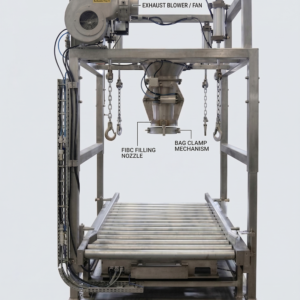
Bagging Machine
Bagging Machine
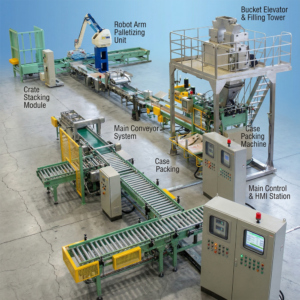
Complete Automatic Packaging System — Every Station, One Supplier
Filler Unit
The right filling mechanism is determined by your product, not your preference. Granules and free-flowing pellets run on multi-head weighers; fine powders require impeller or screw auger mechanisms; reactive or hygroscopic materials need sealed-chamber designs. Specifying the wrong fill type is the most common mistake in line procurement.
Inline Checkweigher
Every automatic packaging line we supply includes an inline checkweigher positioned immediately after the sealer. Checkweighers catch both short-weight bags (compliance risk) and over-filled bags (direct margin loss). On a 25 kg product running 1,000 bags per hour, a 50 g average overfill costs roughly 2 kg of product per hour — that adds up to over 35 tonnes per year on a single-shift operation. See our guide on how to specify an automatic checkweigher for line speed, accuracy and rejection system parameters.
Conveyor System
Conveyors on a packaging line are not a commodity item. Belt width, incline angle, speed synchronisation with the filler and sealer, and accumulation sections between stations all have to be calculated per line. We engineer conveyor sections as part of the line layout, not as an afterthought. Flat belt, roller and cleated incline configurations are available.
Sealer / Bag Closer
Seal type determines shelf life and handling durability. Heat sealing works for PE and laminate bags; sewing (with or without crepe tape) is standard for multi-wall paper and heavy woven bags; valve-bag top-folding is used on cement and plaster applications. The sealer must be matched to bag material — buying a heat sealer for a paper bag line will not work.
Palletiser
Palletising is where the labour saving is most visible — a manual team palletising 25 kg bags produces fatigue-related errors from the second hour of a shift onwards. Automatic palletisers produce consistent layer patterns, correct pallet heights and uniform wrap-ready stacks at the end of every shift, not just the first. Rotary-arm and robot palletizer configurations are available.
Complete Turnkey Automatic Packaging Line
Our most-requested product and the solution we recommend for any producer moving from semi-automatic or manual packing to a fully automatic packaging system. Our turnkey packaging line includes pre-sale layout design, all mechanical and electrical engineering, factory acceptance testing at our facility before shipment, on-site commissioning and operator training. You receive one set of documentation, one PLC programme and one support contact — not a pile of manuals from six different suppliers. Before specifying a line, our turnkey packaging line guide explains what each station covers, where integration projects fail, and how to write a specification that avoids commissioning overruns.
The standard configuration runs: automatic bag presenter → filler → checkweigher → inline sealer → inkjet coder → flat-belt conveyor → rotary palletiser, all controlled by a Siemens S7 or Allen-Bradley PLC with HMI touchscreen. Modifications at engineering drawing stage add minimal cost; modifications after panel build are expensive. We are direct about this during the enquiry process.
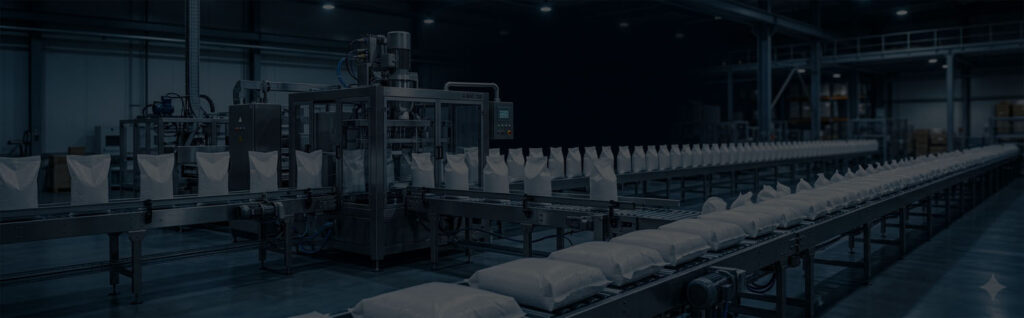
From Bulk Product to Palletised Bag — 4 Integrated Stages
1. Product Feed
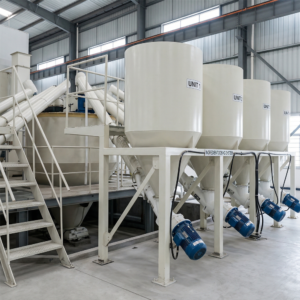
Bulk product is conveyed from silo or hopper into the surge bin above the filler. Level sensors maintain a consistent feed head pressure, which directly affects fill accuracy. Variable-speed feeders prevent bridging in fine powders.
Consistent feed pressure = consistent fill weight
2. Metering & Filling
The filling unit meters the exact target weight into each bag — multi-head weigher for granules, auger or impeller for powders. The bag presenter positions and clamps each bag automatically. Cycle time is matched to line speed via PLC.
Fill cycle runs independently of bag changeover
3. Sealing & Checking
The filled bag moves immediately to the sealer, then passes through the inline checkweigher. Bags outside the tolerance window (±10 g on a 25 kg bag is a typical spec) are rejected to a side conveyor before the palletiser. No under-weight bag reaches the pallet.
Reject rate data logged to HMI and exportable
4. Palletising
The palletiser stacks bags in the programmed pattern onto a pallet. The PLC counts layers and signals when a full pallet is ready for removal. Pallet wrapper integration is available for producers shipping long distances or in humid environments.
Pattern library stored in HMI — no manual reconfiguration
From Experience — 15 Years of Line Commissioning
The station that causes the most commissioning problems is not the filler or the palletiser — it is the bag presenter. Bag presenters are sensitive to bag material consistency: bags cut 2–3 mm shorter than spec, or with humidity-related stiffness variation, will cause misfeeds at 600+ bags per hour. Before commissioning, we always ask customers to send 200 bags from the actual production reel they plan to use — not samples from a different batch. This single step eliminates the most common cause of line downtime in the first month of operation.
Automatic Packaging Lines Across 6 Industries
Grain & Agriculture
Free-flowing granules are the most straightforward automatic bagging application. The focus for grain and seed operations is weighing accuracy, gentle product handling to avoid breakage, and bag material compatibility — woven PP is standard, but some seed products require breathable fabric bags. Multi-head weigher lines running 800–2,000 bags/hour are the standard automatic bagging configuration for grain and seed operations.
Chemical Powder
Chemical powder lines require dust-tight enclosures, sealed bearing housings and — depending on the product’s hazard classification — ATEX/IECEx explosion-proof electrical components. Stainless steel material contact surfaces are standard for corrosive powders. We size the dust extraction system as part of the line design, not as an add-on.
Cement & Building Materials
Cement is abrasive. Standard packaging line components wear out within months in cement applications — impeller blades, spout liners and conveyor belts all need specification for high-abrasion duty. Rotary packers with hardened wear liners and 6–12 filling spouts are standard for cement plants above 1,000 bags/hour.
Animal Feed
Animal feed lines handle a mix of granule sizes, pellets and powder fractions — sometimes in the same run. The filling system needs to handle product density variation without recalibration between batches. Food-grade material contact surfaces are required for pet food applications. Output requirements are typically 600–1,500 bags/hour on 20–40 kg bags.
Food Processing
Food lines require 304 or 316 stainless steel product contact surfaces, washdown-rated electrical components and, for regulated markets, checkweigher integration with HACCP data logging. Lines for flour, sugar, rice and salt each have product-specific requirements — the filling mechanism for rice (multi-head weigher) is different from the one for flour (auger with anti-bridging agitator).
Industrial Goods
Industrial goods — fasteners, plastic pellets, rubber granules, mineral aggregates — often have irregular shapes or high bulk density that standard multi-head weighers are not designed for. We specify the weigher bucket size and discharge angle based on actual product samples before finalising the line design. Getting this wrong at specification stage is the cause of most industrial product line failures.
Manual Packing Line vs. Automatic Packaging Line
| Metric | Manual Packing Line (6 operators) | Automatic Packaging Line |
|---|---|---|
| Output per shift (8 hrs) | 1,400–1,800 bags | 4,800–9,600 bags (line dependent) |
| Labour cost per tonne packed | $3.20–$4.80 per tonne | $0.35–$0.70 per tonne (2 supervisors) |
| Fill weight accuracy | ±1–3% (operator fatigue factor) | ±0.2–0.3% (net weight checkweigher) |
| Product giveaway (avg overfill) | 80–150 g per 25 kg bag | 8–15 g per 25 kg bag |
| Annual giveaway cost (1,000 bags/hr) | $38,000–$72,000 at $0.40/kg product | $3,800–$7,200 — saving $34,000–$65,000/yr |
| Unplanned downtime | 8–14% (absenteeism, fatigue errors) | 2–4% (mechanical; predictive maintenance reduces further) |
| Compliance reject rate | 0.8–2.1% of output | <0.1% (inline checkweigher catches before pallet) |
| Typical ROI period | Not applicable — ongoing cost | 14–24 months (higher-wage markets 11–16 months) |
Four Things We Do Differently on Every Packaging Line Project
📐Pre-Sale Engineering Review
Before issuing a quotation, our engineering team reviews your floor plan, product datasheet (bulk density, particle size, flowability) and target output. This review is not a formality — it has changed the machine specification on roughly one in four enquiries, saving those customers from buying a line that would not have performed as expected. The review costs you nothing and takes 24–48 hours.
📝On-Drawing Customisation
We share engineering drawings with customers before manufacturing begins — not after. Changes at drawing stage cost nothing or very little. Changes after the panel is wired or the frame is fabricated cost real money and weeks of delay. We hold the drawing review open for 7 days. Most customers use 2–3 of those days. The few who skip the review are the ones who later ask for changes that should have been caught at this stage.
📄Full CE Documentation Package
Our CE documentation package covers the Declaration of Conformity, machinery directive technical file, risk assessment, electrical schematic and safety circuit documentation, and the operations and maintenance manual. Every page is in English (other languages available). For buyers importing into the EU or supplying to EU-based customers, this package is not optional — and we know the documentation requirements because we have been supplying CE-certified lines into Europe for over a decade.
🎓Commissioning & Training Included
Factory acceptance testing at our facility, attended by the customer’s engineer if desired, is included on every line. On-site commissioning is included for turnkey line projects. Operator and maintenance training — covering HMI operation, routine maintenance schedule, common fault diagnosis and spare parts identification — is delivered on-site during commissioning. We do not consider a line commissioned until the customer’s team can run it without us standing next to them.
Standard Automatic Packaging Line — Technical Data
| Parameter | Standard Specification | Extended / Custom Range |
|---|---|---|
| Line throughput | 600–1,800 bags/hr (25 kg bags) | Up to 3,000 bags/hr (multi-filler configuration) |
| Bag weight range | 5 kg – 50 kg | 500 g – 5 kg (small-pack line) | >50 kg on request |
| Fill accuracy (net weight) | ±0.2% (multi-head weigher) | ±0.1% (high-precision model) |
| Fill accuracy (auger/powder) | ±0.3% | ±0.15% (servo auger with pre-dosing) |
| PLC brand | Siemens S7-1200 / Allen-Bradley CompactLogix | Mitsubishi, Schneider, Omron (specify at order) |
| HMI | 7-inch colour touchscreen (Siemens or Weintek) | 12-inch, multi-station SCADA available |
| Power supply | 380V / 50 Hz / 3-phase (standard) | 415V, 460V, 480V / 60 Hz available |
| Compressed air requirement | 0.6–0.8 MPa, 0.8–1.5 m³/min | Varies with palletiser configuration |
| Line footprint (standard 4-station) | 14 m × 4 m (approx.) | Up to 35 m × 8 m with palletiser and wrapper |
| Communication protocols | Modbus RTU / TCP, OPC-UA | PROFINET, EtherNet/IP, MQTT (Industry 4.0) |
| Certifications | CE (Machinery Directive 2006/42/EC), ISO 9001 | ATEX Zone 22, FDA (food-grade lines) |
Standalone Machines from the Same Line
Automatic Bagging Machine
Standalone filler units for granule, pellet and powder. 400–2,400 bags/hr.
Liquid Filling Machine
Piston, pump and overflow fillers for thin to viscous liquids. 50 ml – 30 L.
Packing Scale
Standalone net and gross weight packing scales. OIML R76 certified. DCS-ready.
Powder Packing Machine
Dust-tight auger and impeller fillers for fine powders. IP65 standard, ATEX option.
Automatic Packaging Line — Buyer Questions Answered Directly
What is an automatic packaging line?
An automatic packaging line is a series of interconnected machines — filler, checkweigher, conveyor, sealer and palletiser — controlled by a single PLC so product moves from bulk storage to palletised, labelled bag without manual handling at each station. The critical point most suppliers understate is integration: a line is not a collection of machines bolted together. The PLC logic, conveyor speeds, reject handling and alarm escalation all have to be engineered as a system. Buyers who piece together components from different suppliers routinely spend 3–6 months commissioning what a properly integrated turnkey packaging line completes in 2–3 weeks.
How much does a complete automatic packaging line cost?
A practical entry-level automatic packaging line — filler, inline checkweigher, flat-belt conveyor and heat sealer — typically starts at $55,000–$80,000 for standard granule or powder applications at 600–1,000 bags per hour. Mid-range lines with rotary palletiser, dust collection and Siemens S7 PLC run $120,000–$200,000. High-throughput lines above 3,000 bags/hour with automatic bag presentation and robot palletising start at $280,000. The single biggest cost variable is not the machines themselves — it is bag type. Valve-bag lines cost materially more than open-mouth lines because the spout mechanism and bag presenter are more complex.
How long does it take to install and commission a turnkey packaging line?
For a standard 4-station line (filler + checkweigher + conveyor + sealer), factory acceptance testing takes 3–5 days and on-site installation typically runs 7–12 working days, assuming civil works are already complete. Lines with palletisers and automatic bag presentation add 5–8 days. The most common cause of commissioning overruns is the buyer’s floor not being level or the compressed air supply being undersized — both are in our pre-commissioning checklist, which we send at order confirmation. Review that checklist before our engineers arrive, not after.
What PLC brand do you use — and can we specify our preferred brand?
Our standard configuration uses Siemens S7-300/S7-1200 or Allen-Bradley CompactLogix, depending on the customer’s region and existing plant infrastructure. We specify Siemens by default for European and Asian buyers; Allen-Bradley for North American projects where maintenance teams are already trained on it. You can specify an alternative brand — Mitsubishi, Schneider, Omron — at order stage at no significant cost premium, as long as the specification is agreed before engineering drawings are finalised. Changing PLC brand after the panel is built costs real money and time.
What is a realistic ROI period for an automatic packaging line?
Based on projects we have commissioned, payback is 14–24 months for producers replacing a 4–6 person manual packing operation running two shifts. The calculation depends heavily on your local labour cost, the accuracy penalty you are currently paying (short-weight chargebacks or giveaway), and downtime on your current system. Operations in higher-wage markets recover the investment faster — we have seen 11-month payback in Western European food plants. Operations in lower-wage markets see 28–36 months, but they still automate because accuracy and output consistency, not just headcount, drive the decision.
Can an automatic packaging line handle multiple bag sizes without a line change?
Some lines can, most cannot — and overpromising on this point is common in our industry. A properly designed multi-format line with servo-driven bag presenters and adjustable conveyor guides can switch between 3–5 bag sizes in under 20 minutes. Lines that were not designed for changeover from the start require physical spacer swaps and recalibration that can take 2–3 hours. Our recommendation is straightforward: if you run more than two bag sizes regularly, tell us during the enquiry stage. The cost to engineer changeover flexibility in from the start is far less than retrofitting it later.
Do you supply CE documentation — and what does it cover?
Yes — CE documentation is included with every line we supply for the European market. The package covers the CE Declaration of Conformity, machinery directive technical file, risk assessment, circuit diagrams and the operations and maintenance manual in English. For buyers importing into the EU, this is not optional — a packaging line without CE documentation cannot legally be put into service. We see buyers accept machines without documentation because of a lower price; the re-certification cost at destination typically exceeds the initial saving.
What after-sales support do you provide once the line is running?
The first 12 months include remote support via video call at no charge — our engineers are available across GMT+8, GMT+1 and GMT-5 time zones. Spare parts for wear items (seals, bearings, fill spout liners) are stocked and can be air-freighted within 48 hours to most destinations. For complex faults, we offer remote PLC diagnostics via VPN — this resolves the majority of control-related issues without an engineer on-site. On-site support after the warranty period is available at a day rate; most customers use it once every 12–18 months for a scheduled maintenance visit.