Tell us your material, target bag weight, and required output. We’ll spec the right machine and send a detailed quote within 48 hours — direct from the factory, no middlemen.
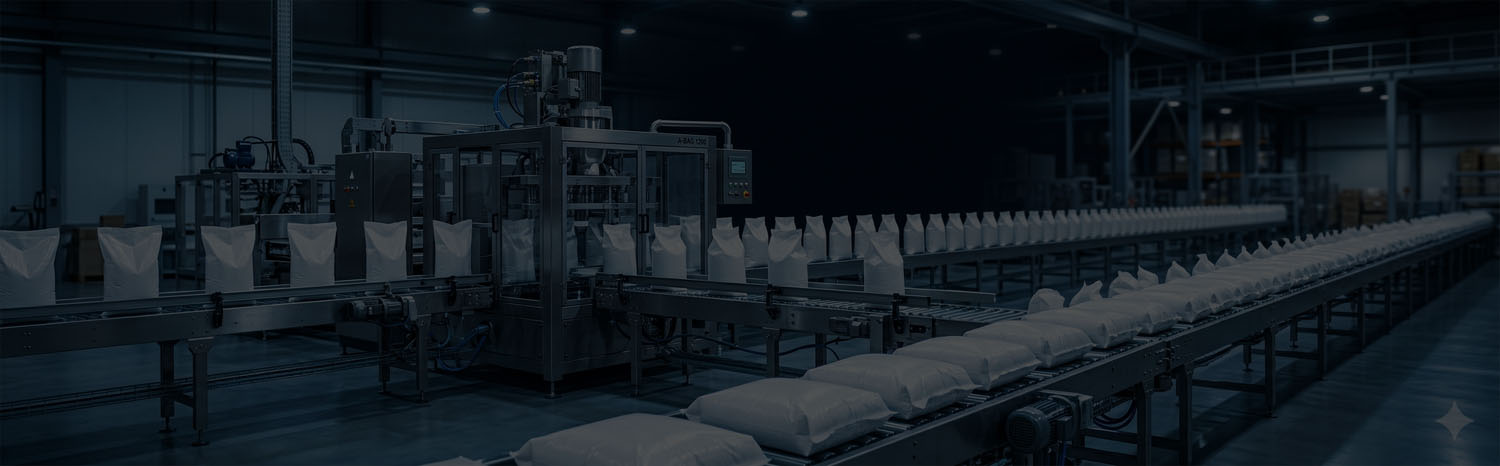
Automatic Bagging Machines for Sale — Full Product Line
Nine machine categories, from single-product liquid fillers to complete turnkey packaging lines. All are available in standard and custom configurations. The right machine depends on your product, not your preference — the notes below are blunt about which applications each type actually suits.
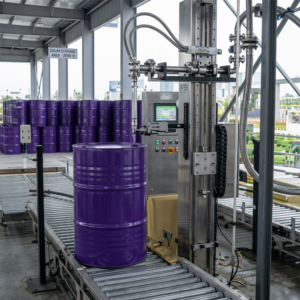
Liquid Filling Machine
Our most-requested category — and the one with the widest range of machine types. Thin liquids (water, alcohol, juice) run on overflow or gravity fillers; viscous products (honey, sauce, lotion) need piston or pump mechanisms. Specifying the wrong type costs both speed and accuracy. Before quoting, we need viscosity range (cP) and target fill volume.
- Fill range: 50 ml – 30 L per container
- Speed: 500–12,000 bottles/hr (model dependent)
- Accuracy: ±0.1–0.5% (gravimetric models ±0.1%)
- Food-grade 304 SS | Pharmaceutical GMP available
Automatic Bagging Machine
The core of our range — multi-head weigher and open-mouth bag filling systems for granule, pellet and free-flowing powder applications. Standard outputs from 400 to 1,800 bags/hour on pre-made bags.
- Bag weight: 1 kg – 50 kg
- Net weight accuracy: ±0.2%
- Compatible: BOPP, woven PP, kraft, laminate bags
Powder Packing Machine
Purpose-built for fine powders — flour, cement, chemical powder, carbon black — where standard auger feeds block up or produce inaccurate fills. Dust-tight construction, impeller or screw filling mechanisms.
- Particle size: ≥ 0 µm (ultra-fine compatible)
- Dust containment: IP65 standard
- ATEX explosion-proof options available
Automatic Packaging Line
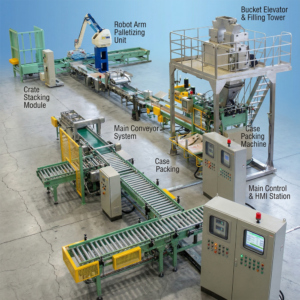
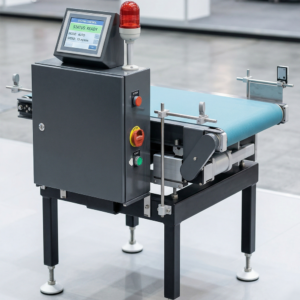
Full turnkey lines integrating filler, checkweigher, conveyor, sealer, labeller and palletiser. Designed for producers moving from semi-automatic to lights-out packaging.
View DetailsPacking Scale
Standalone quantitative packing scales for producers who already have a filling mechanism and need an upgrade to the weighing and data-logging side. Net weight and gross weight configurations. DCS-connected models available.
View DetailsCement Bagging Machine
Cement is abrasive and hygroscopic — it destroys standard bagging equipment within months. Our cement-specific machines use hardened impeller blades, sealed bearing housings and quick-change wear liners. 6–12 spout rotary packers, 800–2,400 bags/hour.
View DetailsOpen Mouth Bag Filling Machine
Handles standard poly, woven and paper bags that require clamp-and-fill rather than valve injection. Faster bag changeover than valve systems, better suited to products with high moisture content that would clog a valve.
View DetailsAnimal Feed Bagging Machine
Feed products range from fine meal to 10mm pellets — often in the same facility. Our feed-specific line handles multi-product runs with tool-free changeovers and hygienic design that meets HACCP guidelines.
View DetailsValve Bag Packing Machine
For applications requiring a fully enclosed, dust-free bag after filling — cement, plaster, chemical powder, gypsum. Valve bags self-seal after spout withdrawal; no additional sealing station required.
View DetailsHow an Automatic Bagging Machine Works
The cycle looks simple in a spec sheet — fill, seal, discharge. In practice, the variables that determine whether a machine actually runs at its rated speed are all in the transitions between those steps.
1. Material Infeed
Hopper receives product from storage. Agitators prevent bridging in cohesive materials.
⚠ Most speed losses happen here — hopper design must match product flow characteristics.
2. Dosing & Weighing
Product is measured by volume (auger/piston) or weight (load cell). Net weight systems verify dose before bag entry.
3. Bag Filling
Bag is picked, opened and positioned. Product discharged in controlled flow to avoid dust or product loss.
⚠ Valve bag injection requires matched spout-to-valve sizing — not standardised across suppliers.
4. Sealing & Discharge
Bag sealed (heat seal, sewn, taped or self-seal valve). Weight checked by downstream checkweigher. Conveyed for palletising.
The buyers who get closest to rated output in the first week of production are the ones who sent us a 200g sample of their actual product before the order was confirmed. Material bulk density, particle size distribution and moisture content determine fill cycle time — and they vary more between batches than most suppliers admit.
Applications of Automatic Bagging Machines
We work across six main industry segments. The machine requirements differ substantially — a grain bagging line and a pharmaceutical powder filler share almost no components.
Food & Grain
Grain and flour producers deal with seasonal demand spikes and strict weight accuracy requirements. Standard multi-head weigher lines with HACCP-compliant contact surfaces. Flour requires sealed filling to prevent dust migration.
Chemical & Pharma
Chemical applications often require ATEX-rated components and material compatibility checks before any machine is specified. Corrosion-resistant construction for acids and salts; explosion-proof for solvent vapours.
Cement & Building Materials
High-volume, abrasive duty. Cement plants run machines 16–24 hours/day; wear rate on standard machines is 3–5× higher. Rotary packers with 6–12 spouts are the industry standard for throughput above 600 bags/hour.
Liquid Filling
Liquid filling has the most machine-type variation of any category — viscosity is the primary selector, not fill volume. Pharmaceutical lines require 21 CFR Part 11 compliance and validated cleaning procedures.
Animal Feed
Multi-SKU operations where changeover speed matters as much as fill speed. Pellet diameters from 2mm to 12mm; meal and crumble on the same line with tool-free format changes.
General Manufacturing
Producers scaling from manual to automated often underestimate the integration work — not the filling machine itself, but the material handling before and after it. We provide complete line layouts including infeed, checkweighing and palletising.
Automatic vs Manual Bagging: What the Numbers Actually Show
Manual bagging operations rarely reach 300 bags/hour per operator at 25 kg — fatigue, bag positioning and scale read time each add 8–12 seconds per cycle. The productivity gap with automatic equipment is not proportional to the price difference.
| Metric | Manual (2 Operators) | Automatic Bagging Machine |
|---|---|---|
| Output per 8-hour shift (25 kg bags) | ~3,200–3,600 bags Based on 220–225 bags/hr/operator; fatigue-adjusted | 8,000–14,400 bags 1,000–1,800 bags/hr; single operator supervision |
| Weight accuracy | ±50–150 g (scale read + pour control) | ±50–75 g net weight (load cell); ±100 g gross weight |
| Labour cost per 1,000 bags (USD, 2 operators @ $15/hr) | ~$17–20 | ~$1.50–4 (1 supervisor + machine amortisation over 5 yrs) |
| Give-away (over-fill to avoid complaints) | 0.3–0.6% of product weight per bag | 0.05–0.15% (machine-controlled) |
| Product loss at $200/tonne grain — 2M bags/year | ~$30,000–$60,000/year in give-away | ~$5,000–$15,000/year in give-away |
| Dusty/hazardous product handling | Requires PPE, ventilation, health risk; operator turnover high | Fully enclosed; operator outside dust zone |
What Separates a 15-Year Manufacturer From a Reseller
We don’t use “leading” or “best” — those words appear on every brochure. Instead, here are the four things buyers consistently say changed their evaluation after the first conversation.
Applications Engineering First
Every enquiry goes to an applications engineer before a quote is generated. We have rejected orders where the machine type requested would not work for the product described. That has cost us short-term revenue and built every long-term relationship we have. If your product has unusual flow characteristics, tell us — we have a physical test lab and will run samples before confirming the design.
Custom Engineering from Day One
Custom specifications (non-standard bag dimensions, integration with existing conveyors, explosion-proof zones, modified hopper geometry) are designed into the machine from the start — not bolted on after a standard machine is built. Off-drawing customisation leads to compromises; we work from your layout drawings.
Commissioning & After-Sales Support
Every machine ships with an operator manual, video commissioning guide and a spare parts list for the first 2,000 hours of operation. Remote video commissioning is included at no charge — an engineer on video call while your team installs. On-site commissioning is available at cost for complex lines. We don’t count a sale as closed until the machine is producing at spec.
Full CE Documentation Package
CE marking requires a complete technical file — Declaration of Conformity, risk assessment, circuit diagrams, O&M manual. We provide the full package in English, not a one-page CE certificate. For EU imports this reduces customs clearance time and eliminates requests for supplementary documentation that often delay delivery.
What Buyers Say After 12 Months on the Line
Three examples chosen because they represent the range — a small grain operation, a mid-size chemical facility, and a cement producer running multi-shift.
We had specified a machine from another supplier based on a PDF quotation. QingXin’s engineer came back and said the auger pitch wasn’t right for our product bulk density and suggested a different filling head. That kind of pushback was unexpected — and correct.
The chemical powder we pack has variable bulk density depending on batch temperature. I was told by two other suppliers this was ‘not a problem’ without testing. QingXin ran a sample test and recommended a different hopper agitator. 18 months in, the machine has not had a single blockage.
We run the cement packer on two shifts, six days a week. The hardened impeller wear liners lasted 14 months before first replacement — the previous machine needed replacement every 4 months. Maintenance cost in year one was 60% lower than the machine we replaced.
Our Products
Questions About Automatic Bagging Machines
Answers based on the questions we actually receive — not the ones most manufacturers prefer to answer. If yours isn’t here, the contact form below reaches an applications engineer, not a sales team.
What is an automatic bagging machine?
An automatic bagging machine is industrial equipment that fills, weighs and seals product into pre-made or formed bags without continuous manual intervention. The key word is ‘automatic’ — it covers the full cycle: bag opening, product feed, weight verification, sealing and discharge. Most buyers we work with are replacing a semi-automatic setup where an operator manually positions each bag; the productivity difference is not marginal — it is typically 3 to 5 times the output per operator hour.
How much does an automatic bagging machine cost?
Entry-level single-head automatic bagging machines start around $4,000–$8,000 for standard granule applications with outputs of 400–600 bags/hour. Mid-range models with higher accuracy weighing systems and variable bag sizes run $12,000–$35,000. Full turnkey automatic packaging lines with conveyors, checkweighers and palletisers typically range from $60,000 to $200,000+. The most important driver of cost is not the filling mechanism itself — it is bag type compatibility and the weighing system (net weight vs gross weight) required for your product.
What materials can be packed with a bagging machine?
Bagging machines handle a wide range of materials, but not all machines handle all materials. Granules and pellets (grain, fertiliser, plastic pellets, animal feed) work well in most auger or multi-head weigher designs. Fine powders (flour, cement, chemical powder) require dust-tight construction and often screw-type or impeller filling. Liquids need entirely different mechanisms — piston, pump or overflow filling. The failure point most buyers encounter is specifying a machine by bag size and output without specifying product bulk density and flowability. Those two factors determine which filling mechanism you actually need.
What is the difference between net weight and gross weight bagging?
Net weight filling weighs the product before it enters the bag — the scale measures only the product. Gross weight filling weighs bag plus product together and subtracts the tare weight. Net weight is faster and typically more accurate (±0.1–0.3%) because the bag weight variation does not affect the reading. Gross weight is simpler and cheaper but sensitive to bag weight inconsistency — a ±2g variation in a 25kg bag is negligible, but in a 500g pouch it matters. For products sold by regulated weight (most food and chemical applications), net weight with a downstream checkweigher is the standard approach.
How long does it take to get a custom bagging machine delivered?
Standard catalogue machines with no modification: 15–20 working days from order confirmation. Custom-engineered machines (modified hopper, explosion-proof components, non-standard bag dimensions, integration with existing conveyors): 35–55 working days. The longest delays we see are not in manufacturing — they are in the specification approval phase. Buyers who come with a clear product datasheet (bulk density, particle size, bag dimensions, target speed, accuracy requirement) move to production 2–3 weeks faster than those finalising specs after order placement.
Do bagging machines require on-site installation support?
Most straightforward single-machine installations can be commissioned by an experienced maintenance team following our video guides and documentation — we have customers in 60+ countries doing exactly this. For full packaging line installations or applications with complex integration requirements (PLC interconnects, central dust collection, ERP connectivity), on-site commissioning support is strongly recommended. We offer remote video commissioning at no additional cost as a first step; on-site engineers are available at cost for complex projects. Be direct about your team’s capability during the enquiry — it affects the documentation package we send with the machine.