
Our Products
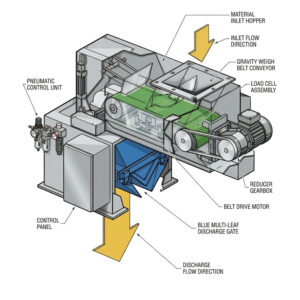
Bagging Machine
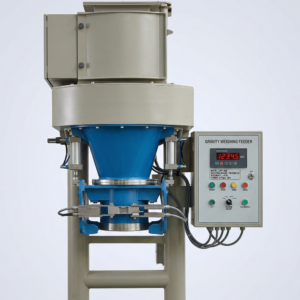
Bagging Machine
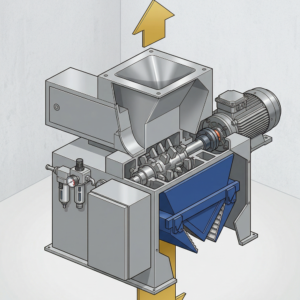
Bagging Machine
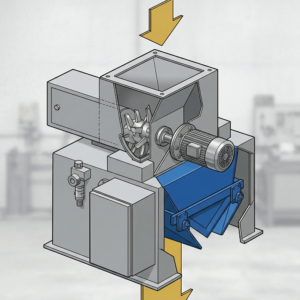
Bagging Machine
DCS-ZA Gravity-Fed (with Agitator) Automatic Packaging Scale
Open Mouth Bag Filling Machine Types
System selection depends on bag weight, product flow characteristics, automation level required, and bag format. These are the main configurations we supply.
Automatic Net Weight bagging machine Open Mouth Bag Filler
Automatic Net Weight bagging machine
The most-requested system in our open mouth range. Load cells under the fill spout weigh every bag individually — coarse fill at full rate to ~85% of target, then fine fill to set-point, then cut-off. Bag tare is measured per bag, so PP woven bag weight variation of ±10–15 g does not affect net fill accuracy.
Where this system consistently pays for itself is on products with variable bulk density — fertilizers, natural minerals, recycled materials, agricultural products where raw material batches are inherently inconsistent. Volumetric systems on these products require operator recalibration every 1–2 hours. Net weight systems run an entire shift without adjustment. At 300 bags/hr and $1.20/bag product value, a 1% reduction in overfill is worth over $200,000 per year.
- Bag weight:5 kg – 50 kg
- Speed:5–14 bags/min (product-dependent)
- Accuracy:±0.3–0.8% at production scale
- Bag types:PP woven, kraft paper, PE, laminated
- Sealing:Stitcher or heat seal integration
Semi-Automatic Open Mouth Bag Filler
Semi-Automatic
Operator places the bag on the fill spout, triggers the fill cycle via foot pedal or push-button, and removes the filled bag. Fill principle is gravity or auger — no load cell. Best for production volumes under 3 bags per minute where capital cost and simplicity matter more than per-bag accuracy. Not appropriate for regulated products where fill weight records are required.
- Bag weight:5 kg – 50 kg
- Speed:2–5 bags/min (operator)
- Accuracy:±1–3%
- Price range:$4,000–$10,000
Dual-Spout Automatic Bag Filler
Dual Spout Automatic
Two fill heads operating simultaneously, each with its own load cell, to approximately double throughput vs single-spout. Best for 25 kg bags where a single-spout system is the line bottleneck. The two load cells are independently calibrated — one spout can be taken offline for maintenance while the other continues production at half capacity.
- Bag weight:10 kg – 50 kg
- Speed:8–18 bags/min
- Accuracy:±0.3–0.8%
- Maintenance:Each spout independently serviceable
Automatic Bag Placer + Filler
With Automatic Bag Placer
Bag magazine, vacuum pick-and-place bag presenter, and fill system integrated. Eliminates the manual bag placement step. PP woven bags and kraft bags require different bag presenter configurations — PP woven needs vacuum cups with slick-surface separation; kraft bags use edge-grip mechanisms. We ask for a sample bag before finalising the presenter design.
- Bag weight:10 kg – 50 kg
- Speed:8–15 bags/min
- Magazine capacity:200–400 bags
- Bag separation:Vacuum (PP) or edge-grip (paper)
Filler + Bag Top Folder & Stitcher
With Inline Stitcher
Integrated bag-top folder folds the open bag mouth into a tight closure, and an industrial bag stitcher sews it closed as the bag moves on the discharge conveyor. Standard for PP woven sacks in fertilizer, chemical, and mineral product markets. Stitch thread specification (PP or jute) affects end-market acceptability — some markets require jute-stitched seams for regulatory or recycling reasons.
- Closure type:Industrial bag stitcher (chain stitch)
- Thread options:PP or jute
- Bag mouth width:300–700 mm configurable
- Integration:Conveyor-mounted, adjustable height
Vertical Form-Fill-Seal (VFFS)
FFS / Form-Fill-Seal
Forms bags from roll-stock film, fills and seals in-line. Suited for smaller bags (1–10 kg) where bag cost per unit matters. Not technically an open-mouth bag filler, but buyers comparing formats should know: FFS gives lower bag cost at volume but higher machine cost, more complex maintenance, and narrower bag material flexibility than a pre-made bag open-mouth system.
- Pack weight:200 g – 10 kg
- Speed:20–80 bags/min
- Film:PE, laminate, kraft-PE
- Best for:Retail packs, small industrial packs
How an Automatic Net Weight bagging machine Bag Filler Works
1. Bag Presentation & Clamping
Bag is placed (manually or automatically) over the fill spout. Pneumatic bag clamps grip the bag mouth against the spout to prevent spillage and ensure dust containment during filling. The clamp force is calibrated to the bag material — too tight tears PP woven bags at the clamp point.
2. Tare & Coarse Fill
Load cell reads bag tare weight with bag clamped. Coarse fill gate opens — product flows at full rate until ~85% of net weight target is reached. The coarse/fine switchpoint is programmable; moving it earlier improves accuracy but slows cycle time. Most products run 80–90% coarse.
3. Fine Fill & Cut-Off
Flow rate reduces to 10–20% of coarse speed. Load cell monitors continuously. Programmable in-flight correction factor accounts for product between cut-off valve and bag. Final weight is logged — data is available for SPC or batch traceability.
4. Discharge, De-aeration & Seal
Bag clamp releases. Bag passes to a discharge conveyor with a vibration or flattening station to reduce headspace (particularly important for animal feed and light powders that need settling before sealing). Bag top is folded and stitched or heat-sealed.
The most common first-week problem on new automatic open-mouth bag lines is bag presenter misfeed — the vacuum cup releases the bag too late, or the bag mouth doesn’t open fully before it contacts the fill spout. In most cases this is a vacuum level calibration issue, not a machine fault. PP woven bags from different manufacturers have different surface coatings that change the vacuum cup release force. We now supply a vacuum level setting procedure as part of the commissioning documentation and include it as the first commissioning check. If you are experiencing consistent misfeed on an existing line, vacuum level and cup condition are where to start.
Applications by Product Type
Fertilizers & Agrochemicals
25 kg and 50 kg PP woven sacks are the dominant format for fertilizer markets globally. Bulk density varies significantly between NPK grades and between production batches — net weight filling is standard. Corrosion-resistant coatings on product contact surfaces are specified for ammonium nitrate and acidic formulations.
Animal Feed & Pet Food
Pellets, meal, and mash in 10–50 kg bags. Variable product bulk density (expanded pellets vs dense meal) makes net weight filling the correct choice. De-aeration after filling is critical for pellets with high void ratio — bags that are not settled before sealing collapse on the pallet. See our dedicated animal feed bagging machine page for full specs.
Chemical Powders & Minerals
Industrial minerals, pigments, calcium carbonate, kaolin, silica — 25 kg kraft paper or PP woven sacks. ATEX classification applies for combustible dusts. Dust containment at the fill spout is standard. Full containment (enclosed fill station) is available for materials with low OEL ratings.
Food Powders — Flour, Sugar, Salt
304 stainless contact parts, CIP-compatible fill spout, food-safe bag clamp materials. 5 kg and 10 kg bags typical for food service and retail; 25 kg for food manufacturing input. For hygroscopic products (salt, some starches), filling in a humidity-controlled environment reduces caking in the bag during storage.
Construction & Building Materials
Tile adhesive, dry mix mortar, gypsum plaster — 20–25 kg bags. Products are abrasive and wear fill spout liners at 3–5× the rate of soft products. Hardened steel or ceramic-lined contact parts are specified as standard for construction material applications. Wear part replacement intervals are included in the maintenance schedule.
Plastic Pellets & Masterbatch
Free-flowing pellets are among the easiest products to fill accurately — low cohesion, consistent bulk density. The main challenge is electrostatic charge buildup on the bag during filling, which interferes with bag clamp release. Anti-static bag clamp materials and earthing points on the fill spout are standard for plastic pellet applications.
Semi-Automatic vs Automatic: When Each Makes Sense
| Factor | Semi-Automatic | Automatic Single-Spout | Automatic Dual-Spout |
|---|---|---|---|
| Production volume (bags/month) | Up to ~5,000 | 5,000–25,000 | 25,000–60,000+ |
| Fill accuracy | ±1–3% | ±0.3–0.8% (net weight) | ±0.3–0.8% (per-spout) |
| Operators required per shift | 1–2 (bag placement + monitoring) | 1 (monitoring + bag placement) | 1 (with auto bag placer: 0) |
| Monthly labor cost at $20/hr, 8hr shift | $3,200–$6,400/month | $1,600–$3,200/month | $0–$1,600/month |
| Capital cost | $4,000–$10,000 | $18,000–$35,000 | $30,000–$55,000 |
| Payback vs semi-automatic (at 10,000 bags/month) | Baseline | 12–18 months typical | 18–24 months typical |
| Downtime risk | Low — simple mechanics | Medium — bag presenter, PLC | Medium — two independent spouts mitigate risk |
Labor cost baseline: 1 operator per shift × $20/hr × 8 hours × 20 working days. Payback calculation based on labor saving only — overfill reduction adds additional return. Actual payback depends on production volume and product value.
Why Buyers Choose QingXin Machinery
Sample Bag Review Before Build
We ask for a physical bag sample before finalising the bag presenter and clamp specification. PP woven bags vary considerably in surface coating, mouth stiffness, and opening behaviour between manufacturers. A bag presenter designed for bags from Manufacturer A may misfeed consistently with bags from Manufacturer B. Getting this right at specification stage takes two weeks; fixing it after delivery takes two months.
Integrated System Quoting — Filler, Conveyor, Sealer
We quote filler, discharge conveyor, bag top folder, and stitcher or heat sealer as a system. Buyers who price these components separately from different suppliers routinely find that interface dimensions do not match, conveyance speeds are mismatched, and the sealer is spec’d for the wrong bag top thickness. Integration problems after delivery are expensive to fix and slow to resolve.
Net Weight Data Logging Standard
Every automatic net weight system logs fill weight per bag with timestamp and can export CSV data for batch traceability or statistical process control. For regulated industries (pharma, agrochemicals, food) this data is a compliance requirement. For all buyers it gives early warning of fill accuracy drift before bags go out of spec — you see it in the data trend before it becomes a customer complaint.
CE Technical Documentation Provided
CE marking on open mouth bag fillers requires a machine risk assessment covering the fill spout (nip points, dust exposure), the bag presenter (trap points), and the integrated conveyor and sealer. We provide the full technical file — not just the Declaration of Conformity. Buyers who have had CE challenge at customs or from H&S auditors understand why the technical file matters beyond the label on the machine.
Technical Specifications
| Parameter | Semi-Automatic | Automatic Single-Spout | Automatic Dual-Spout |
|---|---|---|---|
| Bag weight range | 5 kg – 50 kg | 5 kg – 50 kg | 10 kg – 50 kg |
| Fill accuracy | ±1–3% | ±0.3–0.8% | ±0.3–0.8% |
| Speed | 2–5 bags/min | 5–14 bags/min | 8–18 bags/min |
| Fill principle | Gravity or auger | Net weight (load cell) | Net weight (dual load cell) |
| Bag types | PP woven, paper, PE | PP woven, paper, PE, laminated | PP woven, paper, PE, laminated |
| Bag mouth width range | 250–600 mm | 280–700 mm | 280–700 mm |
| Dust extraction | Hood optional | Hood standard | Hood standard |
| Sealing options | Manual stitcher add-on | Stitcher or heat seal | Stitcher or heat seal |
| Control system | Manual / timer | PLC + load cell controller | PLC + dual load cell controller |
| Data logging | No | Per-bag weight log (CSV) | Per-bag weight log (CSV) |
| Power supply | 220V 50/60Hz | 380V 3-phase 50Hz | 380V 3-phase 50Hz |
| Lead time | 10–15 days | 18–25 days | 22–30 days |
Related Packaging Equipment
Automatic Bagging Machine
Complete bagging systems for powders, granules, and free-flowing materials with high-speed automation.
Animal Feed Bagging Machine
Specialised open-mouth bag fillers for pellets, meal, and mixed feed with de-aeration for stable bag form.
Packing Scale
Standalone gravimetric packing scales. Same net weight fill principle as our automatic open-mouth systems.
Automatic Packaging Line
Turnkey lines integrating open-mouth bag filling, sealing, checkweighing, and palletising.
Frequently Asked Questions
What is an open mouth bag filling machine?
An open mouth bag filling machine fills pre-made bags — PP woven sacks, multi-wall paper bags, PE bags — through their open top, then closes and seals them. This is distinct from valve bag filling (where a spout inserts into a sealed sleeve) and FFS/form-fill-seal (where the bag is formed from roll stock film). Open mouth bag systems are the dominant format for 10–50 kg industrial bags of powder, granules, and free-flowing materials in chemical, agricultural, food, and mineral product sectors.
What is the filling speed for an open mouth bag filler?
Semi-automatic single-spout systems: 3–6 bags per minute, operator-dependent. Automatic single-spout with bag placer: 5–10 bags per minute. Automatic dual-spout: 8–16 bags per minute. Automatic with rotary bag carousel: up to 20–25 bags per minute at 25 kg. Published speeds are for free-flowing granular products at the minimum bag weight — cohesive powders and large bags (50 kg) typically run 30–40% slower. We validate speed at your product density during pre-shipment testing.
What bag types work with this machine?
Open mouth bag fillers handle PP woven sacks (the most common industrial bag format), multi-wall kraft paper bags (2–4 ply), PE film bags, and laminated composite bags. They do not handle valve bags or wicketed retail packs — those require different equipment. Bag width and length range, top opening width, and gusset dimensions must be specified when ordering, as the fill spout, bag clamping width, and bag presenter are all configured to your bag dimensions.
How is fill weight accuracy maintained across different bag lots?
Net weight systems with load cells under the fill spout measure actual weight per bag and compensate for product bulk density variation automatically. This is different from volumetric filling where a density change of ±5% causes a ±5% weight error. For buyers whose product bulk density varies batch to batch — which is common in agricultural products, recycled materials, and natural minerals — net weight filling is the only system that maintains weight accuracy without constant recalibration.
What sealing options are available after filling?
The standard option for PP woven bags is a bag-top stitcher — an industrial sewing machine mounted on a conveyor arm that stitches the bag mouth closed as the bag passes. For paper and laminated bags, hot-melt glue closers or tape closers are typical. Heat seal bars are available for PE-lined bags where a hermetic seal is required. The choice of sealer affects how tightly the bag top is folded before sealing, which affects palletisation stability.
What is the price of an open mouth bag filling machine?
Semi-automatic gravity fill systems: $4,000–$10,000. Automatic net weight single-spout with bag presenter: $18,000–$30,000. Automatic net weight dual-spout with conveyor: $28,000–$50,000. High-speed systems (15+ bags/min) with automatic bag placer, conveyor integration, and checkweigher: $50,000–$100,000. The main cost variables are the fill principle, the level of automation on bag handling, and whether a bag stitcher or sealer is included. We quote these as a system — standalone filler prices are misleading if you then have to add the conveyance, sealing, and checkweighing separately.
How does the automatic bag placer work?
The bag presenter picks individual bags from a stack magazine using vacuum cups or mechanical grippers, opens the bag mouth, and presents it over the fill spout. This is the step most likely to cause stoppages on a new line, particularly with PP woven bags that have a slick surface finish and tend to stick together in a stack. Bag magazine orientation and the opening mechanism are configured to your specific bag material and dimensions. We ask for a sample bag before finalising the bag presenter design.
What Buyers Say After 12 Months on the Line
Real feedback from three production environments — grain, chemical powder, and cement.
We had specified a machine from another supplier based on a PDF quotation. QingXin’s engineer came back and said the auger pitch wasn’t right for our product bulk density and suggested a different filling head. That kind of pushback was unexpected — and correct.
The chemical powder we pack has variable bulk density depending on batch temperature. I was told by two other suppliers this was ‘not a problem’ without testing. QingXin ran a sample test and recommended a different hopper agitator. 18 months in, the machine has not had a single blockage.
We run the cement packer on two shifts, six days a week. The hardened impeller wear liners lasted 14 months before first replacement — the previous machine needed replacement every 4 months. Maintenance cost in year one was 60% lower than the machine we replaced.
Request a Factory Direct Quote
CE-certified machines, factory pricing, 48-hour quote turnaround.